


This 2026 patient guide is brought to you by Ryan Frederickson DDS, your Grandville MI family dentist. For personalized advice or to schedule an appointment, call our Grandville-area dental office at (616) 534-5602 or request a visit online.
If you’ve lost a tooth recently, then you know how it can affect more than just how you look in the mirror. Suddenly, things like eating and talking are more difficult, uncomfortable, or even painful. Our restorative dentists at Family Dentistry can restore both the look and the function of your tooth with a dental bridge.What Is a Dental Bridge?
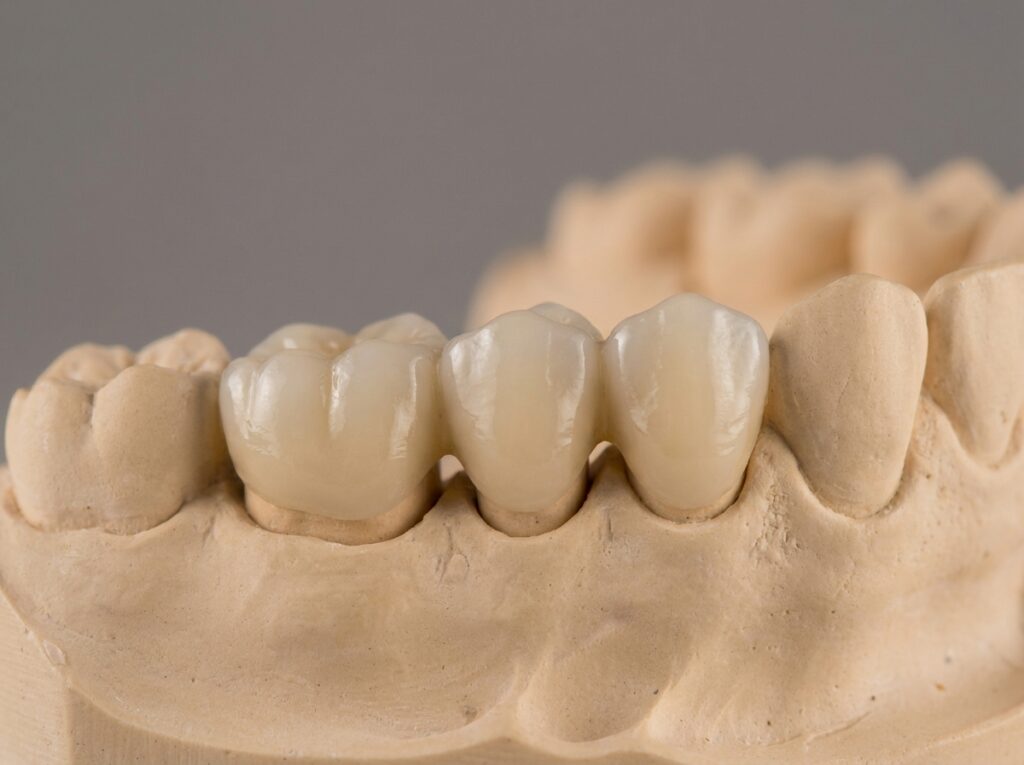
A dental bridge is made of three components: a dental crown, an artificial tooth, and another dental crown. The crowns fit over your existing teeth to anchor your new artificial tooth into place, “bridging” the gap left by your lost tooth.What to Expect During the Procedure
First, we’ll need to prepare the teeth on either side of your gap to receive their crowns. Dental crowns fit like caps over your existing teeth, but they’ll feel too big and bulky if your teeth aren’t prepared correctly. That means removing some of your teeth’s enamel so the crowns will fit properly. Don’t worry — although your enamel serves an important role in protecting your teeth from disease and decay, your new crowns will be just as effective. Next, we’ll use our in-office technology to create your custom bridge. Then, we’ll permanently attach the bridge to your teeth and secure it in place.How a Dental Bridge Can Help
Tooth loss can cause multiple problems for both the appearance and the function of your smile. A dental bridge is a simple, minimally invasive solution to such problems as:- Continued tooth loss: If you don’t restore your smile after tooth loss, more tooth loss may soon follow. Your teeth stay in place not just because of their own tooth roots, but also because of the stability of surrounding teeth. Healthy teeth will start to shift to fill a gap left by tooth loss, changing your bite and loosening your teeth, increasing the likelihood of tooth loss.
- Jawbone deterioration: Your natural tooth roots stimulate your jawbone, keeping your tissue healthy. Tooth loss can cause your jawbone to deteriorate, leading to more tooth loss or even facial collapse.
- Gum disease: Brushing your teeth twice a day, flossing daily, and getting a teeth cleaning every six months can go a long way in preventing gum disease. However, tooth loss creates an empty pocket in your gums in which plaque and food particles can collect, increasing your risk for gum disease.
- Difficulty eating or speaking: You may find yourself avoiding your favorite foods after tooth loss or speaking with a lisp. A dental bridge can restore your teeth so you can eat and speak like you did before you lost your tooth.